Scripps Institution of Oceanography cheapens itself by using the “D” word

Today Watts Up With That? commented about a statement by the Scripps Institution of Oceanography titled A Response to Climate Change Denialism. The statement is actually a pretty clear “executive level” defense of the conclusions of mainstream climatolgists. The Watts Up post primarily objects to the use of the word “denialist”, which denialists are very sensitive about, and accuses Scripps of name-calling and politicization. But that’s the tag you get stuck with when you have a pattern of ignoring or proposing repeatedly debunked alternatives to every logical scientific theory or pattern of historical facts about Climate Change that you don’t like.

Coleman's CornerAccording to the post, somehow the Scripps statement is a same-day response to elderly weatherman John Coleman’s denialist “Special Report” Global Warming: The Other Side that aired exclusively on San Diego’s independent station KUSI (also San Diego’s source for The Jerry Springer Show and Judge Judy). You can track it down on YouTube as well. Pretty quick work if true, and it’s comforting to think that an internationally renowned research centre is keeping such a close watch on community news.

So why is this statement being mentioned on Watts Up? It’s called a dog-whistle. The post encourages readers to bombard the Scripps Institution’s administrators and staff with e-mails. Going forward, Anthony’s audience will be able to “know” that anything the Scripps Institution says “is biased” and can safely ignore research from Scripps that challenges their disbelief in AGW.

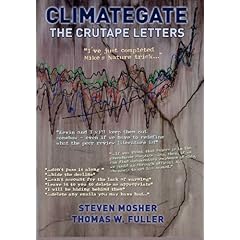
Climategate: The CRUtape Papers

Here’s our first coverage of a Watts Up With That? post!

Yesterday Anthony Watt promoted a friend’s breathless self-published analysis of the CRU e-mails, Climategate: The CRUtape Letters. (Some of the unguarded personal correspondence to and from climatologists at the University of East Anglia’s Climate Research Unit was illegally obtained and released by unknown parties in November of 2009.) From published excerpts the authors seem to have added a layer of self-congratulatory “context” to guide willing readers toward their conclusions while studiously ignoring any credible explanations.

The trumpeted revelations of collusion and fraud purportedly in these e-mails were presented as a fatal indictment of the evidence for global warming as well as the reputations of the climatologists in question. When the shouting died down the e-mails proved to show no evidence of data tampering or scientific obstruction. The accusations were fabricated from out of context phrases, presented in deliberately misleading ways, or ignored common scientific usage in favour of disingenuously naïve interpretations. Much was also made over remarks about out-dated programming code fragments that were never in fact used in published research. See The Associated Press’s analysisNature’s Dec. 3rd 2009 editorial. If the data sets these attacked climatologists use are excluded from global temperature trend plots there is effectively no difference in the result.

Anthony also quotes their praise of his own surfacestations.org project, an ill-conceived Scout Troop-style project that failed in its attempt to prove that “bad” urban weather station data was giving a false impression of warming. (See here and here.)

The curious book title is presumably an allusion to The Screwtape Letters, C.S. Lewis’ fictional correspondence between two demons about their failed attempts to corrupt a devout Christian. Denialists often try to paint conventional understanding of climate change as inflexible religious or political dogma, but in this particular instance the allusion suggests that the climatologist’s purported deceits have not “shaken the faith” of denialists.

2012-07-19 Update: Norfolk police have called off their investigation for procedural reasons, but state:

“However, as a result of our inquiries, we can say that the data breach was the result of a sophisticated and carefully orchestrated attack on the CRU’s data files, carried out remotely via the internet. The offenders used methods common in unlawful internet activity to obstruct inquiries. There is no evidence to suggest that anyone working at or associated with the University of East Anglia was involved in the crime.”